When anxiety rises, the mind speeds up and the body tightens, and it can feel impossible to think clearly. Mindfulness for anxiety offers a set of simple, portable techniques to interrupt that spiral, not by forcing the feeling away, but by gently anchoring your attention in the present, where things are usually more manageable than the worried story in your head. This guide walks through practical techniques you can use the moment tension begins to build.
Why Mindfulness Helps With Anxiety
Anxiety thrives on the future, the endless “what if.” Mindfulness gently returns you to the present moment, interrupting that forward rush. It does not pretend the worry away; it simply gives your attention somewhere steadier to rest. Over time, this practice helps create space between a trigger and your reaction. For a wider toolkit, our guide to mindfulness techniques for stress relief covers complementary approaches.
Technique 1: The 5-4-3-2-1 Grounding Exercise
When your mind is racing, drop into your senses. Name five things you can see, four you can hear, three you can touch, two you can smell, and one you can taste. This sensory checklist pulls your attention out of anxious thought and back into the room. It is one of the most reliable tools for acute moments.
Technique 2: Longer Exhales
Your breath is a direct line to your nervous system. Breathe in for a count of four, then out for a count of six. A longer exhale gently encourages the body to settle. Repeat for a minute or two. The counting also gives the anxious mind a small, neutral task to focus on.
Technique 3: Name the Feeling
Silently labeling what is happening, “this is anxiety,” “this is worry,” creates a small but real bit of distance. You become the observer of the feeling rather than fully swept up in it. This noticing is a core mindfulness skill, closely related to the STOP technique, a one-minute reset worth keeping in your pocket.
Technique 4: A Tactile Anchor
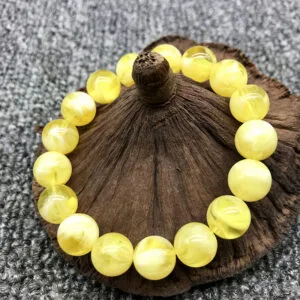
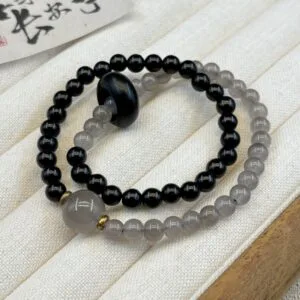
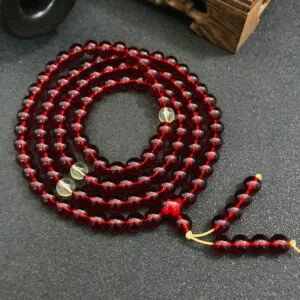
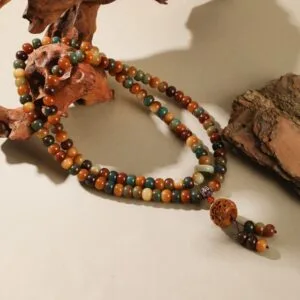
Anxiety often makes the mind feel ungrounded, so give it something physical to hold. A smooth stone, your fingertips pressed together one at a time, or a strand of mala beads moved one bead per breath all offer a concrete focus. The combination of touch and rhythm is especially steadying when thoughts feel scattered.
Technique 5: Feet on the Ground
Bring your full attention to the soles of your feet pressing into the floor. Feel the contact, the weight, the support beneath you. This simple act of “coming back to the ground” is quietly powerful when anxiety makes you feel like you are floating away from the moment.
Building These Into Calmer Moments
The key is practice before you need it. Rehearse these techniques when you are already calm:
- A 5-4-3-2-1 scan while waiting somewhere.
- A minute of longer exhales before a meeting.
- Naming small feelings as they come and go.
- Holding a tactile anchor during a quiet moment.
Practiced in calm, they become far easier to reach for when anxiety actually hits.
A Realistic Note
Mindfulness supports calm and can help you relate to anxious feelings differently, but it is not a treatment for anxiety disorders or any medical condition. If anxiety regularly interferes with your life, please speak with a healthcare professional. These techniques work best as one supportive tool alongside the care you may need.
Final Thoughts
Mindfulness for anxiety is about gently returning to the present: grounding through the senses, lengthening the exhale, naming the feeling, holding a tactile anchor, and feeling your feet on the ground. Practiced often, these become reliable tools for tense moments. If you would like a calming object to anchor your practice, The Harmony, made for inner calm, is a gentle companion. Find something to hold and breathe through the next wave.