Among the oldest and simplest concentration practices is candle gazing, known in some traditions as trataka. It asks almost nothing of you: a candle, a quiet spot, and a few minutes of steady attention. For people who find eyes-closed meditation difficult because the mind races, a soft visual focus can be a welcome doorway into stillness. This guide explains what candle gazing is, how to practice it safely, and what it offers.
What Candle Gazing Is
Candle gazing is the practice of resting your eyes gently on a candle flame, using that single point of light as your anchor. Instead of following the breath or a sound, you give your attention to the flame. The steadiness of the light helps steady the mind. It is a close cousin of other gentle-focus practices, like the soft gaze meditation we describe elsewhere, but here the flame gives the eyes a clear, single object.
Setting Up
You need very little:
- A candle placed at roughly arm’s length, with the flame at about eye level.
- A dim, draft-free room so the flame stays steady.
- A comfortable seated position where your back can be upright but relaxed.
Settle in, take a few slow breaths, and let your body soften before you begin.
How to Practice
Rest your gaze softly on the flame, around the brightest part just above the wick. Let your eyes relax rather than straining or staring hard. Blink whenever you need to; this is not a contest. When your attention drifts, gently bring it back to the flame, the same returning that lies at the heart of all meditation. Begin with just one or two minutes and let the practice be easy.
Working With a Busy Mind
The flame gives a racing mind something concrete to hold, which is why many people find candle gazing easier than closed-eye practice. Thoughts will still come. When they do, you simply notice and return your gaze. This gentle discipline of returning is exactly the skill that mindfulness builds, and the flame makes it tangible.
Adding a Tactile Anchor
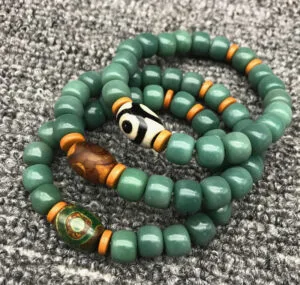
You can deepen the practice by combining the visual focus with touch. Holding a strand of mala beads and moving one bead with each slow breath, while your gaze rests on the flame, gives both the eyes and the hands a steady job. This layering of anchors can be especially helpful on days when the mind feels particularly scattered.
Closing the Practice
When you finish, gently close your eyes for a moment and let the afterglow of the flame fade behind your eyelids. Take a few easy breaths before returning to your day. Like any reflective practice, the closing matters, it gives the stillness a chance to settle, much as a quiet evening review lets the day settle before sleep.
A Note on Safety
Practical care matters with an open flame: never leave a candle unattended, keep it away from anything flammable, and place it on a stable surface. If your eyes feel tired or strained, stop and rest them. Candle gazing should feel soft and easy; if it becomes uncomfortable, shorten your sessions.
A Realistic Note
Candle gazing supports concentration and a sense of calm, and it is a traditional contemplative practice rather than a medical or vision treatment. It makes no health claims. If you have an eye condition, check with a professional before practicing. Its value is simply in offering the mind a steady, gentle place to rest.
Final Thoughts
Candle gazing is a beautifully simple way into stillness: a flame, a quiet room, and the soft discipline of returning your gaze whenever it wanders. Start with a minute or two, practice safely, and let the steady light steady you. If you would like a tactile anchor to pair with the flame, The Path, made for stillness within, is a fitting companion. Light a candle tonight and let your attention rest.