When stress builds or sleep feels out of reach, the breath is one of the few tools you always have with you. The 4-7-8 breathing technique is a simple, structured pattern that many people use to slow down and settle. Here is how it works and how to practice it well.
What is the 4-7-8 breathing technique?
The 4-7-8 technique is a paced breathing exercise. The numbers refer to a count: you breathe in for four, hold for seven, and breathe out for eight. The long, slow exhale is the heart of it. By extending the out-breath and adding a gentle pause, the pattern encourages your breathing to slow and your attention to settle on a simple rhythm.
It is one of several paced breathing methods, and it sits comfortably alongside the approaches in our guide to breathing techniques for anxiety and stress relief. Many people keep a couple of these patterns on hand for different moments.
How to practice it
- Sit or lie down somewhere comfortable. Let your shoulders soften.
- Breathe out fully through your mouth to begin with an empty feeling.
- Close your mouth and breathe in quietly through your nose for a count of four.
- Hold your breath gently for a count of seven.
- Breathe out slowly through your mouth for a count of eight, letting the air leave smoothly.
- That is one round. Repeat for three or four rounds to start.
The counts do not need to be in seconds. Use a pace that feels comfortable for you, and keep the ratio roughly the same. If holding for seven feels like too much at first, shorten everything while keeping the exhale the longest part.
Why the long exhale helps
A slow, extended out-breath gives the mind a clear, repeatable focus and naturally slows the pace of breathing. Many people find this steadying when they feel wound up. It is worth being honest about what this is: a calming, focusing exercise, not a medical treatment. If you have a respiratory condition or feel lightheaded, ease off and breathe normally. The technique should feel gentle, never strained.
Adding beads to the rhythm
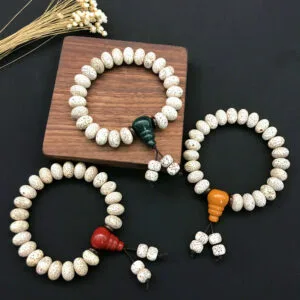
Some people like a physical anchor to go with the count. A strand of beads works beautifully here. Move to the next bead at the end of each full round, so your hands keep time with your breath. A smooth, grounding piece such as The Soft 3 — for Steady Ground gives the fingers something steady to hold while you settle into the pattern. If the idea appeals, our guide to meditating with mala beads explains the technique in more detail.
When to use it
- Before sleep: a few rounds in bed can help you wind down at the end of the day.
- In a tense moment: a quiet round or two can create a small pause before you respond.
- As a daily reset: a short session in the morning or afternoon can mark a deliberate break.
Making it a habit
Like any practice, the 4-7-8 technique works best when it becomes familiar. Try linking it to something you already do, such as the moment you get into bed or sit down at your desk. A short, regular practice is far more useful than an occasional long one. Our mindfulness morning routine shows how a small breathing habit can anchor the start of a day.
Something to hold onto
The 4-7-8 breathing technique is simple, portable, and always available. Breathe in for four, hold for seven, out for eight, and let the long exhale carry the tension with it. Practiced regularly, this quiet rhythm becomes something to hold onto, a steadying pattern you can return to whenever you need a moment of calm.