Have you ever come back from a slow walk among trees feeling unexpectedly settled, as if your shoulders had quietly dropped an inch? That experience has a name: forest bathing. It’s a simple, gentle practice of spending unhurried time in nature with your senses open, and it’s grown popular worldwide as an antidote to busy, screen-heavy days. In this guide you’ll learn what forest bathing is, how to practice it step by step, and how to get its benefits even if a real forest isn’t nearby.
This article covers:
1. What Forest Bathing Is
2. How to Practice Forest Bathing
3. Tips and Adaptations
…FAQ
What Forest Bathing Is
Forest bathing is a translation of the Japanese term shinrin-yoku, which means “taking in the forest atmosphere.” Despite the name, there’s no water involved; the “bathing” refers to immersing your senses in a natural setting. It’s not a hike or a workout. The whole point is to slow down, move gently or sit still, and simply notice what’s around you: the light through leaves, the sound of birds, the texture of bark, the smell of soil after rain.
The practice emerged in Japan in the 1980s as a response to urban stress, and it has since spread widely as a way to counterbalance time spent indoors and on screens. At heart it’s a form of outdoor mindfulness, applying the same present-moment attention described in our guide to what mindfulness is, but with nature as the anchor instead of the breath. Being among trees gives the senses something rich and ever-changing to rest on.
It’s fair to say nature simply feels good to most people, and forest bathing is a gentle wellness practice rather than a medical treatment. You don’t need to track outcomes or do it “correctly.” The invitation is just to be present outdoors, much like the quiet attention in our piece on watching the sky. Treated this way, it’s one of the most accessible practices there is.
How to Practice Forest Bathing
There’s no rigid method, but these steps will help you settle into it.
1. Choose a calm natural spot. A wood, park, or any green space with trees works well. You don’t need wilderness; a quiet corner of a city park is enough. Pick somewhere you can wander slowly without worrying about traffic or a destination.
2. Leave the agenda and the phone. Turn off notifications or leave the phone away entirely. Forest bathing is about presence, not photos or step counts. Releasing the urge to document or achieve anything is half the practice.
3. Slow your pace dramatically. Walk far more slowly than usual, or simply find a place to sit. There’s nowhere to get to. Moving slowly signals to your nervous system that there’s no rush, which is where the sense of calm begins.
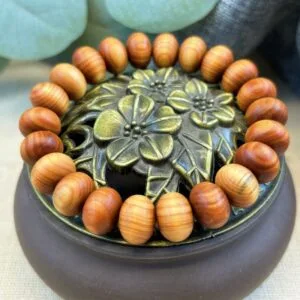
4. Open your senses one at a time. Spend a minute just listening, then a minute noticing what you see, then what you can smell, then the feel of air on your skin. Cycling through the senses keeps attention anchored in the present and away from mental chatter. A small grounding object, such as a piece from our Grounding & Strength collection, can give your hands a quiet point of focus as you do this.
5. Stay a while, then close gently. Aim for at least twenty minutes if you can, though even ten is worthwhile. Before you leave, pause to notice how you feel compared to when you arrived. That simple comparison helps the practice register.
Tips and Adaptations
The most common mistake is turning forest bathing back into a goal-driven activity, marching briskly to a viewpoint or filling the time with conversation. The slowness and the silence are the active ingredients, so resist the urge to make it productive. If your mind keeps planning or replaying the day, gently return your attention to a sound or a sensation, the same way you would in seated meditation. Wandering attention is normal, not a failure.
No forest nearby? You can adapt the practice almost anywhere. A single tree in a courtyard, a potted plant by a sunny window, or a few minutes in a small garden can all serve. The principle, slow down and let your senses rest on something natural, travels well. Even bringing more nature indoors supports the same feeling, an idea we explore in our piece on arranging a mindful home. If you’d like to understand the gentle, no-pressure spirit behind practices like this, our about page explains our approach.
Frequently Asked Questions
What exactly is forest bathing?
It’s a gentle practice of spending unhurried time in nature with your senses open, translated from the Japanese term shinrin-yoku. There’s no water and no workout involved; the “bathing” means immersing yourself in the forest atmosphere. It’s essentially outdoor mindfulness.
How long should forest bathing take?
Twenty minutes or more is ideal, but even ten minutes is worthwhile. What matters most is slowing right down rather than covering distance. Stay long enough to let your pace and attention truly settle.
Do I need an actual forest?
No. A park, a garden, or even time spent with a single tree or houseplant can work. The key is slowing down and resting your senses on something natural, which you can do almost anywhere.
Is forest bathing the same as hiking?
No. Hiking is exercise with a destination, while forest bathing is deliberately slow and aimless, focused on sensing rather than moving. You can hike to a quiet spot and then forest bathe, but the two have different aims.
Bringing It Together
Forest bathing is the simple, restorative practice of slowing down in nature and letting your senses rest on the world around you, no destination required. Leave the agenda behind, move slowly, open your senses, and stay a while. To bring a grounding anchor into your time outdoors or a nature-inspired pause at home, explore our Grounding & Strength collection.