Choosing a mala can feel surprisingly personal. With so many materials, bead counts, and sizes, it helps to know what actually matters. This guide on how to choose mala beads walks through the practical decisions so you can pick a strand that fits your hands, your routine, and your taste.
Start with how you will use it
The first question is simple: do you want to wear your mala or use it for seated counting? A full 108-bead strand is traditional for counting practice and longer sessions. A wrist mala is easier to wear through the day and keep close at hand. Many people end up with one of each over time, but it is worth deciding what you reach for first.
If you are completely new to the practice, our simple starter guide to mala beads is a good companion to this article.
Understanding bead count
The classic mala has 108 beads plus a larger “guru” bead that marks the start and end of a round. The number 108 carries meaning across several traditions, which we explore in our piece on the meaning of 108 mala beads. Wrist malas use smaller counts, often 18, 21, or 27, which divide evenly into 108. If you are curious about those, our guide to wrist mala bead counts explains what each number represents.
Choosing a material
Material is where personal preference really comes in. Each one has its own look, weight, and feel:
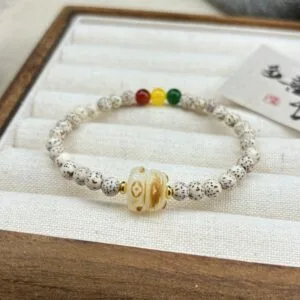
- Bodhi seed: light and textured, with natural markings. Durable and well suited to daily handling.
- Sandalwood: smooth and warm with a gentle fragrance. A classic, calming choice.
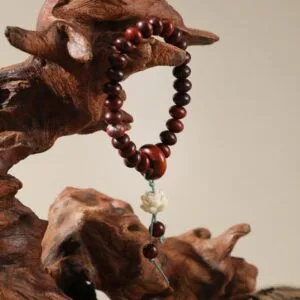
- Rosewood: dense with a reassuring weight and rich reddish color.
- Lotus seed: light with a distinctive natural pattern, prized for its understated character.
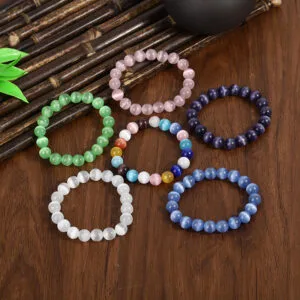
- Stone and agate: cool to the touch and a little heavier, with beautiful color variation.
There is no “correct” material. The best one is the one you most enjoy holding, because that is the strand you will actually use. A warm, grounded everyday piece such as The Companion 4 — to Hold Onto shows how a comfortable, familiar feel makes a strand easy to return to.
Bead size and comfort
Bead size affects how the strand feels in your fingers. Smaller beads, around 6 to 8 mm, are light and discreet. Larger beads, 10 mm and up, are easier to move one at a time and have more presence in the hand. If you can, hold a few sizes before deciding. The right size is the one that feels natural to roll between your fingertips.
Quality details to check
- Even finish: beads should feel smooth and consistent, with no rough edges.
- Consistent sizing: uniform beads move more comfortably through the hand.
- Secure stringing: a well-knotted strand on strong cord will last longer.
- Honest materials: natural wood and seed will show small variations, and that is part of the charm.
Matching the strand to your practice
Think about where the mala will live. A desk practice might favor a heavier strand you keep in a bowl. An on-the-go habit suits a wrist mala you never take off. If you already have a daily sitting practice, you might choose a material that complements it. Our guide to meditating with mala beads can help you picture how the strand fits into a session.
A note on expectations
A mala is a beautiful, practical tool. Its value is in the focus and rhythm it supports, not in any property of the material itself. Choosing well simply means picking a strand that feels good to hold and suits how you want to practice.
Something to hold onto
When you choose mala beads, trust your hands as much as your eyes. Pick the count that matches your practice, the size that feels natural, and the material you genuinely enjoy. The right strand becomes something to hold onto, a quiet companion that grows more familiar every time you use it.