Sandalwood has been part of meditation and ritual for thousands of years, prized for its warm tone and gentle, lasting scent. If you own or are considering sandalwood beads, knowing the sandalwood benefits and how to care for the wood will help you get the most from it. Here is a clear, honest look.
Why sandalwood is so valued
Sandalwood is a slow-growing wood with a fine, even grain and a distinctive soft fragrance that can linger for years. In many contemplative traditions it has been used for prayer beads, incense, and carving because it is pleasant to handle and ages gracefully. Its appeal is sensory and cultural rather than medicinal, and that is exactly where its quiet strength lies.
The practical benefits of sandalwood beads
- A grounding scent: the natural aroma of sandalwood is warm and subtle. Many people find that catching it as they handle their beads becomes a gentle cue to slow down and breathe.
- A smooth, warm feel: sandalwood is comfortable against the skin and warms quickly in the hand, which makes it pleasant for counting beads or simply holding.
- Beautiful aging: with regular handling, the oils from your skin deepen the color and bring out a soft sheen over time. Your beads slowly become uniquely yours.
- Lightweight comfort: sandalwood is light enough to wear all day without strain, whether as a wrist mala or a full strand.
It is worth being clear: sandalwood is valued for its sensory and traditional qualities. We make no claims about it affecting health. The benefit is in the experience of handling and wearing it as part of a mindful routine.
How to care for sandalwood beads
Sandalwood is durable but does best with a little attention.
- Keep them dry: avoid soaking sandalwood or wearing it in the shower. Prolonged water exposure can dull the finish and raise the grain.
- Wipe gently: use a soft, dry cloth to remove dust and skin oils. Skip harsh cleaners and alcohol, which can strip the natural surface.
- Let them breathe: store your beads in a cloth pouch or open dish rather than a sealed plastic bag, which can trap moisture.
- Handle them often: ironically, regular use is one of the best forms of care. The natural oils from your hands keep the wood conditioned and the scent alive.
For a deeper dive into one specific strand, our article on sandalwood mala beads meaning, use, and care covers the topic in detail.
Reviving the scent
Over years of use the fragrance may soften. A light rub with your fingers warms the wood and brings the aroma forward again. Some people lightly sand a tiny, hidden spot to refresh the scent, though this is optional and best done sparingly. The fading and reviving of the scent is part of the natural life of the wood.
Choosing a sandalwood piece
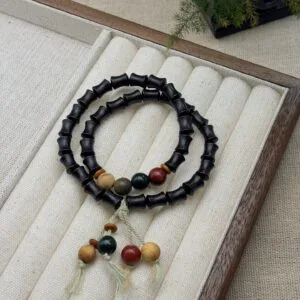
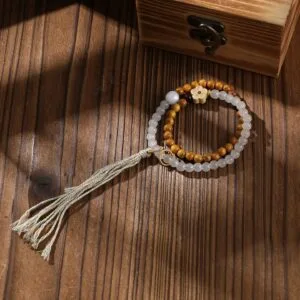
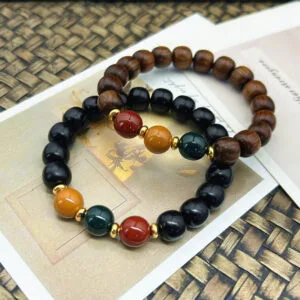
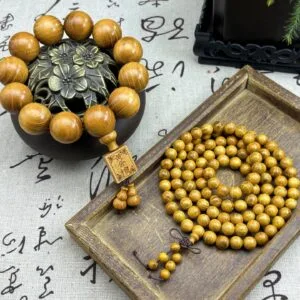
When selecting beads, look for an even grain and a smooth finish that feels good in the hand. A warm, everyday piece like The Warmth 2 — for Daily Practice is a natural fit for those drawn to wood. If you are still deciding between materials, our mala for beginners guide can help you weigh the options.
A wood that grows with you
Sandalwood rewards patience. The more you handle it, the better it looks and the more familiar its scent becomes. Cared for simply and used often, a sandalwood strand becomes something to hold onto, a warm and quietly beautiful companion to your daily practice.
A word on sourcing and authenticity. Sandalwood is a slow-growing wood, and good pieces reflect that. When choosing beads, focus on how the wood looks and feels rather than on dramatic claims. A genuine, well-finished strand will have an even grain, a comfortable weight, and a scent that is present but never overpowering. Trust your senses over marketing language.
However you use it, sandalwood rewards a slow, steady relationship. It is not a wood for one dramatic moment but for a thousand small ones, the daily handling that gradually makes it yours. That patient quality is exactly why it has stayed close to contemplative practice for so many centuries, and why it remains such a comforting material to keep within reach.