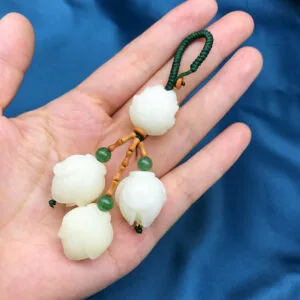
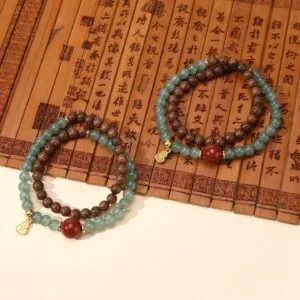
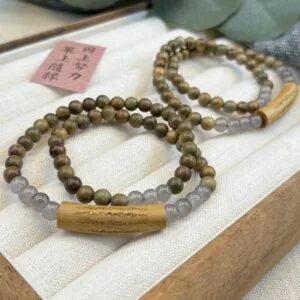
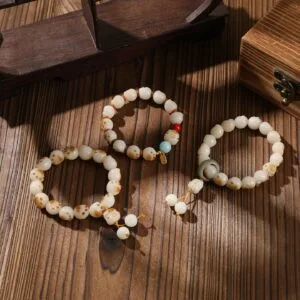
Among the natural materials used for prayer beads, lotus seed holds a quiet, distinctive place. Light in the hand and marked with natural patterns, lotus seed mala beads carry both beauty and deep symbolism. If you are drawn to them, here is what makes them special and how to choose and care for a strand.
What are lotus seed mala beads?
Lotus seed beads are made from the seeds of the lotus plant, dried and polished into beads. They are notably light, with a smooth surface and subtle natural markings, sometimes small “eyes” or grain lines that give each bead its own character. Over time and with handling, the seeds can deepen in color, taking on a warm, lived-in patina.
The symbolism of the lotus
Few plants carry as much meaning as the lotus. It grows up through muddy water to open into a clean, beautiful bloom, and across many cultures it has become a symbol of clarity, renewal, and rising above difficulty. Beads made from its seed naturally carry this association, which is part of why they are so cherished for reflective practice.
These meanings are symbolic and cultural rather than medical. A lotus seed strand will not change your circumstances on its own. What it offers is a beautiful object whose symbolism can support an intention you bring to your practice, a small reminder of clarity and fresh starts.
Why people choose lotus seed for practice
- Lightness: the beads are very light, which makes long strands comfortable to hold and wear.
- Natural texture: the subtle markings give the fingers something gentle to register during counting.
- Beautiful aging: with regular handling, lotus seed develops a warm, polished tone that is uniquely yours.
- Meaningful symbolism: the lotus association makes the strand feel especially fitting for reflection.
If you are weighing lotus seed against other materials, our guide on how to choose mala beads walks through the main considerations, and our piece on rosewood mala beads makes a useful comparison with a denser wood.
Choosing a lotus seed strand
Look for beads with an even, smooth finish and consistent sizing so they move comfortably through your fingers. Natural variation in the markings is expected and adds to the charm, so do not expect every bead to look identical. A full 108-bead strand suits seated counting, while a wrist mala is easier for everyday wear. A light, naturally patterned piece such as The Blossom 7 — for Daily Practice reflects the understated character that draws people to lotus seed.
Using your beads
The practice itself is simple. Hold the strand and move through the beads one at a time, pairing each with a breath or a quiet phrase. The lightness of lotus seed makes long sessions easy on the hands. If you are new to bead practice, our step-by-step guide to meditating with mala beads covers the technique clearly.
Caring for lotus seed beads
- Keep them dry and avoid prolonged water exposure, as the seeds are porous.
- Wipe gently with a soft, dry cloth.
- Store in a cloth pouch rather than sealed plastic so the material can breathe.
- Handle them often. Regular use brings out the warm patina over time.
With this simple care, a lotus seed strand can stay with you for many years, slowly changing color and feel as it absorbs the natural oils from your hands. That gradual transformation is part of what makes the beads feel so personal.
Something to hold onto
Lotus seed mala beads bring together lightness, natural beauty, and a symbolism of clarity and renewal. Cared for simply and used regularly, a strand deepens in color and becomes more familiar with every session. It turns into something to hold onto, a quietly meaningful companion for reflection that grows richer the longer you keep it.