If sitting still with your thoughts feels difficult, a body scan can be a gentler way in. Instead of focusing on the breath alone, you move your attention slowly through the body, noticing what is there. Here is a clear guide to body scan meditation and how to practice it.
What is a body scan meditation?
A body scan is a practice of moving your attention gradually through the body, from one area to the next, simply noticing the sensations you find. You are not trying to change anything or relax on command. You are practicing the skill of attention by giving it a clear, gentle path to follow through the body.
Because it gives the mind something concrete to do, many beginners find the body scan more approachable than breath-focused sitting. It is a natural companion to the techniques in our beginner’s guide to mindfulness.
How to practice a body scan
- Get comfortable. Lie down or sit in a supported position. Let your eyes close if that feels right.
- Take a few settling breaths. Allow your body to soften into the surface beneath you.
- Begin at your feet. Bring your attention to your toes and the soles of your feet. Notice any sensation, warmth, pressure, tingling, or nothing in particular.
- Move slowly upward. Shift attention to your ankles, lower legs, knees, and so on, pausing at each area.
- Include everything. Continue through the torso, arms, hands, neck, and face, all the way to the top of your head.
- Rest at the end. Spend a moment sensing the body as a whole before you finish.
When your mind wanders, and it will, simply notice where you left off and return. That returning is the practice itself, not a sign you are doing it wrong.
What to expect
Some areas will feel vivid, others almost blank. Both are fine. You are not searching for a particular feeling or trying to fix anything. It helps to be clear about what a body scan is: a practice for training calm, steady attention. It is not a medical treatment, and it is not about forcing relaxation. The relaxation that sometimes comes is a pleasant side effect, not the goal.
Using an anchor
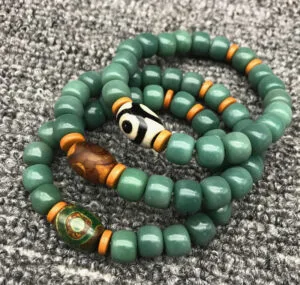
Some people like to begin or end a body scan by holding a strand of beads, using the cool, smooth weight as a way to arrive in the present before they start. A grounding piece such as The Feel — for Steady Ground gives the hands something steady to rest on as you settle in. If you prefer a moving practice instead, our guide to walking meditation offers another gentle option.
When to practice
- Before sleep: a slow scan in bed can help you let go of the day.
- To reset midday: even a short scan can create a clear pause.
- When you feel disconnected: moving attention through the body can bring you back to the present.
Tips for getting more from it
- Go slower than feels necessary. The unhurried pace is part of the practice.
- Keep your attitude curious rather than critical. You are observing, not assessing.
- Start with a short scan of five to ten minutes and extend it as it becomes familiar.
- If you fall asleep during an evening scan, that is fine. Treat it as rest.
Something to hold onto
A body scan meditation asks only that you move your attention gently through the body and notice what is there. There is no goal to reach and nothing to fix, just the quiet practice of being present with yourself. Returned to regularly, the body scan becomes something to hold onto, a steady way to arrive back in the present whenever you need it.